HARPTA and Capital Gains: How Your Hawaii Tax is Really Calculated
Your HARPTA withholding is based on sale price but your actual tax is based on your gain. Here is how to calculate it with real examples and timing strategies.
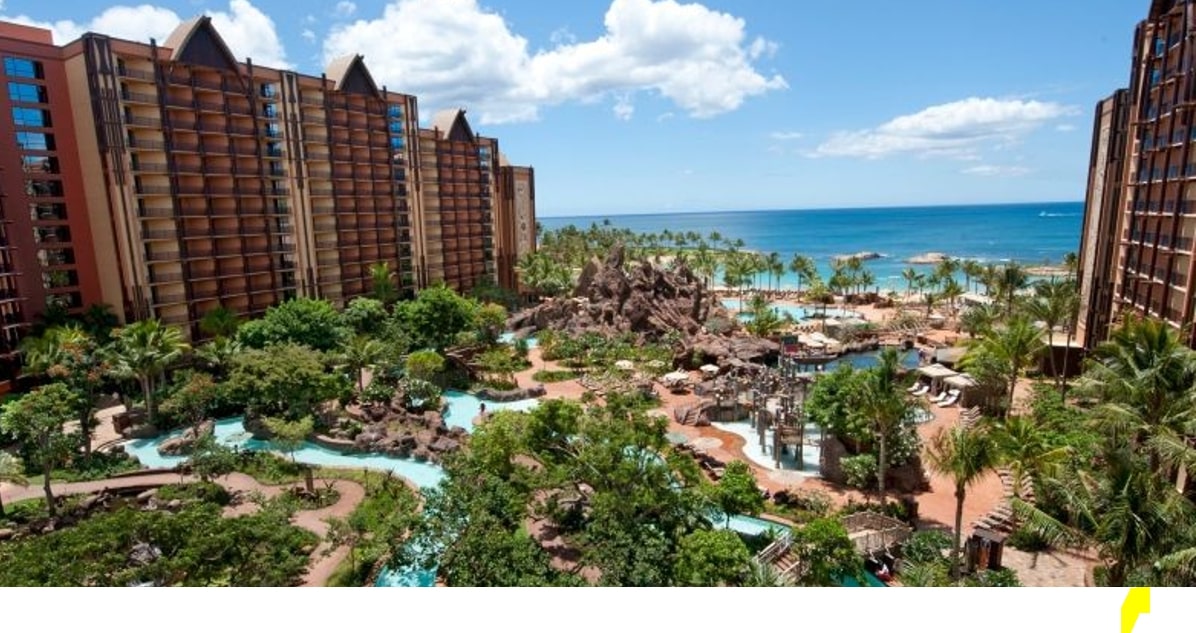
Every Aulani DVC seller I talk to has the same reaction when they see the HARPTA withholding on their closing statement: "Wait, that's how much they're taking?" And every time, I explain the same thing. The 7.25% HARPTA withholding is based on your sale price. Your actual Hawaii tax is based on your gain. Those are different numbers, and the gap between them is your refund.
That distinction is the single most important thing to understand about HARPTA and capital gains when selling Aulani DVC. Once you get it, the rest falls into place.
Withholding vs. Actual Tax: The Core Distinction
HARPTA withholding is blunt. The title company takes 7.25% of the gross sale price at closing and sends it to the Hawaii Department of Taxation. Sell your Aulani contract for $28,000? They withhold $2,030. Sell for $18,000? They withhold $1,305. It doesn't matter whether you made money on the sale or lost money. The percentage is the same either way.
Your actual Hawaii tax liability works completely differently. It's based on your capital gain: the difference between what you sold for and what you paid (your cost basis). If you bought for $22,000 and sold for $28,000, your gain is roughly $6,000. Hawaii taxes that $6,000 at graduated rates, not the whole $28,000.
See the problem? The withholding grabs 7.25% of $28,000. The tax applies to maybe $6,000. The withholding will almost always exceed the tax, often by a wide margin. The excess comes back to you as a refund when you file Form N-288C or a Hawaii income tax return.
How to Calculate Your Cost Basis
Your cost basis is more than just the purchase price you paid for the Aulani contract. It includes several legitimate expenses that reduce your taxable gain. I've seen sellers leave money on the table by only reporting the contract price and forgetting the rest.
Here's what goes into your cost basis:
- Original purchase price. What you actually paid the seller for the DVC contract. This is on your original closing statement.
- Original closing costs. Title fees, escrow fees, recording fees from when you bought the contract. These typically run $400 to $1,200 for DVC resales.
- Disney transfer fee. Disney charges a fee to transfer the membership. As of recent years this has been around $195 to $250, though it's changed over time.
What does not count toward your basis: annual maintenance fees (those are personal use expenses, not capital costs), membership dues, exchange fees, or any vacation costs you incurred while using the points. I get asked about maintenance fees constantly. They don't count. Never have.
Hawaii's Tax Rate Brackets for Capital Gains
Here's something that surprises most mainland sellers: Hawaii doesn't have a separate, lower capital gains rate like the federal system does. For non-residents, capital gains are taxed at the same graduated rates as ordinary income. The brackets for 2026 look roughly like this for single filers:
- 1.4% on the first $2,400
- 3.2% on $2,401 to $4,800
- 5.5% on $4,801 to $9,600
- 6.4% on $9,601 to $14,400
- 6.8% on $14,401 to $19,200
- 7.2% on $19,201 to $24,000
- Higher brackets up to 11% on income over $200,000
For most Aulani DVC sales, the gain falls somewhere in the $2,000 to $10,000 range. That puts the effective Hawaii tax rate on the gain at roughly 3% to 6%. Compare that to 7.25% of the entire sale price being withheld, and you can see why the refund is almost always substantial.
Worked Example 1: Moderate Gain
Sarah bought 200 Aulani points in 2019 for $22,000. Her original closing costs were $750 and she paid a $195 Disney transfer fee. Total cost basis: $22,945.
She sells in 2026 for $28,000.
| Item | Amount |
|---|---|
| Sale price | $28,000 |
| Cost basis | $22,945 |
| Capital gain | $5,055 |
| HARPTA withheld (7.25% of $28,000) | $2,030 |
| Estimated Hawaii tax on $5,055 gain | ~$204 |
| Estimated refund | ~$1,826 |
Sarah had $2,030 withheld and owes roughly $204. Her HARPTA refund is approximately $1,826. That's 90% of the withholding coming back.
Worked Example 2: Small Gain
Tom bought 150 Aulani points for $25,000 in 2022. Closing costs: $650. Disney transfer fee: $195. Cost basis: $25,845.
He sells in 2026 for $27,000.
| Item | Amount |
|---|---|
| Sale price | $27,000 |
| Cost basis | $25,845 |
| Capital gain | $1,155 |
| HARPTA withheld (7.25% of $27,000) | $1,957.50 |
| Estimated Hawaii tax on $1,155 gain | ~$16 |
| Estimated refund | ~$1,941 |
Tom's gain is tiny. The Hawaii tax on $1,155 at the bottom bracket rate of 1.4% is about $16. He's getting virtually all of his $1,957.50 withholding back.
Worked Example 3: Selling at a Loss
Maria bought 100 Aulani points at a market peak for $30,000 in 2015. Closing costs: $900. Transfer fee: $195. Cost basis: $31,095.
She sells in 2026 for $24,000.
| Item | Amount |
|---|---|
| Sale price | $24,000 |
| Cost basis | $31,095 |
| Capital gain (loss) | ($7,095) |
| HARPTA withheld (7.25% of $24,000) | $1,740 |
| Hawaii tax on a loss | $0 |
| Refund | $1,740 (full withholding) |
Maria lost $7,095 on this sale. She owes Hawaii absolutely nothing. But HARPTA still grabbed $1,740 at closing. She files Form N-288C, reports the loss, and gets every penny of that $1,740 back.
Can a Hawaii Loss Offset Other Income?
Short answer for non-residents: no. A capital loss on your Aulani sale cannot be used to offset other income on your Hawaii non-resident return. Hawaii only taxes non-residents on Hawaii-source income, and the loss is limited to that specific category.
On your federal return, it's a different story. The capital loss from Aulani can offset other capital gains, and up to $3,000 of net capital losses can offset ordinary income. But that's the IRS, not Hawaii.
Why the Withholding Almost Always Exceeds the Tax
I've done these calculations for hundreds of Aulani sellers, and the pattern is remarkably consistent. The withholding exceeds the tax in probably 95% of cases. The withholding rate (7.25%) applies to the entire sale price. The tax rate (1.4% to 11%, graduated) applies only to the gain. For the withholding to equal the tax, you'd need a scenario where the gain is almost the entire sale price AND the tax rate on that gain is close to 7.25%. That's extremely rare for DVC resales.
Tax Planning: How Closing Date Affects Your Filing Timeline
When your Aulani sale closes determines when you can file, which determines when you get your money back. This is worth thinking about if you have any flexibility on timing.
The HARPTA refund via Form N-288C has a simple timeline: you can file as soon as the sale closes, regardless of what month it is. Hawaii typically processes these in 3 to 6 months.
The federal return (Form 1040-NR for non-US persons, or Schedule D on Form 1040 for US persons) is different. You can't file until the tax year ends on December 31.
Early-Year Sales: January Through March
Sell your Aulani contract in February and you can file N-288C by March. Hawaii refund arrives by June to September. Good so far.
But your federal return? You sold in February 2026, so you can't file your 2026 federal return until January 2027 at the earliest. The IRS refund won't arrive until May to August 2027. That's over a year after your sale closed.
Late-Year Sales: October Through December
Close in November and file N-288C in December. Hawaii refund arrives by March to June of the following year. But now the federal return can be filed in January, just weeks after the tax year ends. Both refunds land in roughly the same window.
Strategic Timing for the Fastest Combined Refund
If you have genuine flexibility, an October through December closing gives you the tightest combined refund window. File both the N-288C and your federal return in January. Get both refunds by mid-year.
But I want to be realistic. Most sellers pick their closing date based on when the buyer is ready, how quickly Disney processes the transfer, and personal circumstances. Tax timing is a factor, but it shouldn't be the deciding factor. Use our tax estimator to see what your specific numbers look like.
Offsetting Gains and Losses in the Same Year
If you're selling other investments during the same tax year as your Aulani sale, think about how the gains and losses interact. On your federal return, capital losses from stocks, bonds, or other property sales can offset your Aulani capital gain.
For Hawaii, this only works if both gains and losses are Hawaii-sourced. Stock market losses don't offset Hawaii real property gains on your non-resident return because the stock losses aren't Hawaii-source income.
Using the Tax Estimator
Every seller's numbers are different. Rather than doing all this math by hand, use our HARPTA tax estimator to plug in your specific numbers. It'll show you the estimated gain, the approximate Hawaii tax, the withholding amount, and the estimated refund. It takes about 30 seconds.
Don't Leave Your Refund on the Table
The single biggest mistake I see Aulani sellers make is not filing for their HARPTA refund at all. They see the withholding on the closing statement, assume it's the tax, and move on. Thousands of dollars, gone. Hawaii won't send you a check on their own. You have to file.
Whether your gain is large, small, or negative, the withholding almost certainly exceeds your actual tax. File your N-288C, include your closing documents and proof of cost basis, and get your money back. Check out our complete tax checklist for Aulani sellers to make sure you don't miss any steps. And if you have questions, our FAQ page covers the most common scenarios we see.
Your HARPTA withholding is a deposit, not a donation. Treat it that way.
How is my actual Hawaii capital gains tax calculated on an Aulani DVC sale?
Your Hawaii tax is based on your capital gain (sale price minus cost basis), not the full sale price. Cost basis includes your original purchase price, closing costs, and Disney transfer fee. The gain is taxed at Hawaii's graduated income tax rates, which range from 1.4% to 11%. For most DVC sale gains of $2,000 to $10,000, the effective rate falls between 3% and 6%, which is significantly less than the 7.25% HARPTA withholding on the full sale price.
Does the timing of my Aulani sale affect how quickly I get my HARPTA refund?
The HARPTA refund timeline through Form N-288C is the same regardless of when you sell, since you can file immediately after closing. Processing takes 3 to 6 months. However, your federal refund timeline is affected by timing. Late-year closings (October through December) allow you to file your federal return in January, getting both refunds within the first half of the following year.
What happens if I sell my Aulani DVC contract at a loss?
If your sale price is less than your cost basis, your capital gain is zero and you owe no Hawaii tax. The entire HARPTA withholding (7.25% of the sale price) is refunded when you file Form N-288C. However, non-residents cannot use a Hawaii real property loss to offset other Hawaii income. On your federal return, the loss can offset other capital gains and up to $3,000 of ordinary income.
DVC Sales lists your Aulani membership for just 6.9% commission.
As the team behind this HARPTA guide, we help you sell and walk you through the Hawaii withholding and refund process every step of the way.
Was this helpful?